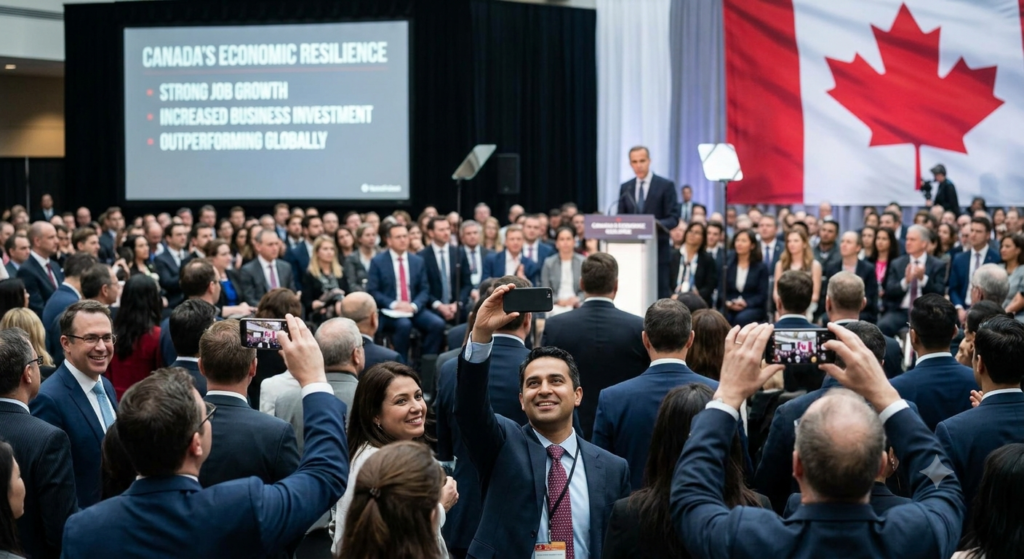

Trade tensions between Canada and the United States have returned to the headlines—and investors are understandably wondering what the latest tariffs could mean for their portfolios, purchasing power and financial plans.
Effective September 8, 2026, Canada introduced counter-tariffs of 15%, 25% and 50% on approximately $27.6 billion of selected American imports. The affected categories include steel, dairy products, appliances, agricultural equipment, pulp and paper, and electronics. These measures respond to tariffs imposed by the United States on Canadian goods. Government of Canada details
While the headlines may sound alarming, tariffs are not new—and neither is market uncertainty. The important question for investors is not simply what happened, but how to respond thoughtfully.
What is a tariff?
A tariff is a tax charged on imported goods. Although the importing company initially pays it, some or all of the additional cost may eventually be passed along through higher prices.
Canadian tariffs on American products could therefore make certain imported goods more expensive. Meanwhile, American tariffs can make Canadian products less competitive in the United States, potentially affecting sales, profits, employment and investment in exposed industries.
Because the Canadian and American economies are closely connected, tariffs can affect both sides of the border.
How could tariffs affect Canadians?
The effects will not be identical for every household, business or industry, but several areas deserve attention.
Higher prices
Tariffs can increase the cost of imported products and the materials businesses use to produce other goods. Consumers may notice higher prices on certain appliances, electronics, vehicles, food products or building materials.
Not every tariff results in an equal price increase. Businesses may absorb part of the cost, change suppliers or adjust their operations. Nevertheless, tariffs generally create upward pressure on costs.
Slower economic growth
Businesses facing uncertain costs or reduced access to the American market may delay investments, hiring or expansion plans.
The Bank of Canada has said that tariffs and trade uncertainty have placed the Canadian economy on a lower growth path than before the trade conflict began. Its July 2026 outlook indicated that the economy remained weak but was showing signs of improvement, with growth expected to recover gradually. Bank of Canada Monetary Policy Report
Interest-rate uncertainty
Tariffs create a difficult combination: they can weaken economic growth while simultaneously raising some prices.
Normally, slower growth might support lower interest rates. Higher inflation, however, can make rate reductions more difficult. That means the Bank of Canada must watch whether tariff-related price increases remain temporary or become part of broader, persistent inflation.
This does not mean rates will necessarily move in one direction or another. It means the economic outlook has become more complicated—and predictions should be treated cautiously.
What could tariffs mean for investments?
Tariff announcements can cause short-term market volatility, particularly for companies and sectors directly affected by trade restrictions.
Some Canadian exporters may face declining American demand or lower profit margins. Companies dependent on imported materials could experience higher costs. Other businesses may benefit from increased demand for Canadian-made alternatives, new trade relationships or changes in supply chains.
There may also be effects on the Canadian dollar. Trade uncertainty can weaken confidence in the economy, but currency movements are influenced by many additional factors, including interest rates, energy prices and global investor sentiment.
The key point is that tariffs do not affect every investment in the same way. That is one reason diversification remains so important.
Should investors make changes?
A major headline is not automatically a reason to change a long-term investment plan.
Markets continually adjust to new information—often before individual investors have time to react. Selling after negative news may lock in losses, while waiting to reinvest can mean missing an eventual recovery.
Instead of trying to predict the next tariff announcement, investors can focus on matters within their control:
- Maintain an appropriate mix of investments across industries, countries and asset types.
- Keep sufficient short-term savings available for planned expenses.
- Review whether the portfolio still matches personal goals, time horizon and comfort with risk.
- Avoid making important financial decisions based solely on fear or breaking news.
- Rebalance when necessary rather than attempting to time the market.
Diversification cannot eliminate risk or guarantee a profit, but it can reduce dependence on the performance of one company, industry or country.
Canada will continue to adapt
Trade patterns can change, but businesses and economies are not static.
Canadian companies may seek new export markets, develop domestic suppliers, invest in productivity and adjust how they manufacture or distribute their products. Some industries will face genuine challenges, while others may discover new opportunities.
The transition may take time, and there will likely be more unsettling headlines along the way. Successful long-term investing, however, has never depended on accurately predicting every political decision or economic event.
It depends on discipline, diversification and having a plan.
The Orca Wealth perspective: Core then explore
At Orca Wealth, our approach is “Core then explore.”
The core of a financial plan should be designed around long-term goals, appropriate diversification and sound risk management. Once that foundation is established, selected opportunities can be explored without allowing short-term speculation to overwhelm the overall strategy.
Tariffs deserve attention—but not panic.
If recent market developments have left you wondering whether your investments remain properly positioned, this may be a good time to review your plan. The objective is not to react emotionally to every headline. It is to make sure your strategy remains aligned with your needs, values and future.
Orca Wealth and Insurance Services
Saving you money since 1987.
This article is provided for general information only and should not be considered individualized investment, tax or legal advice. Investment values may fluctuate, and past performance does not guarantee future results.